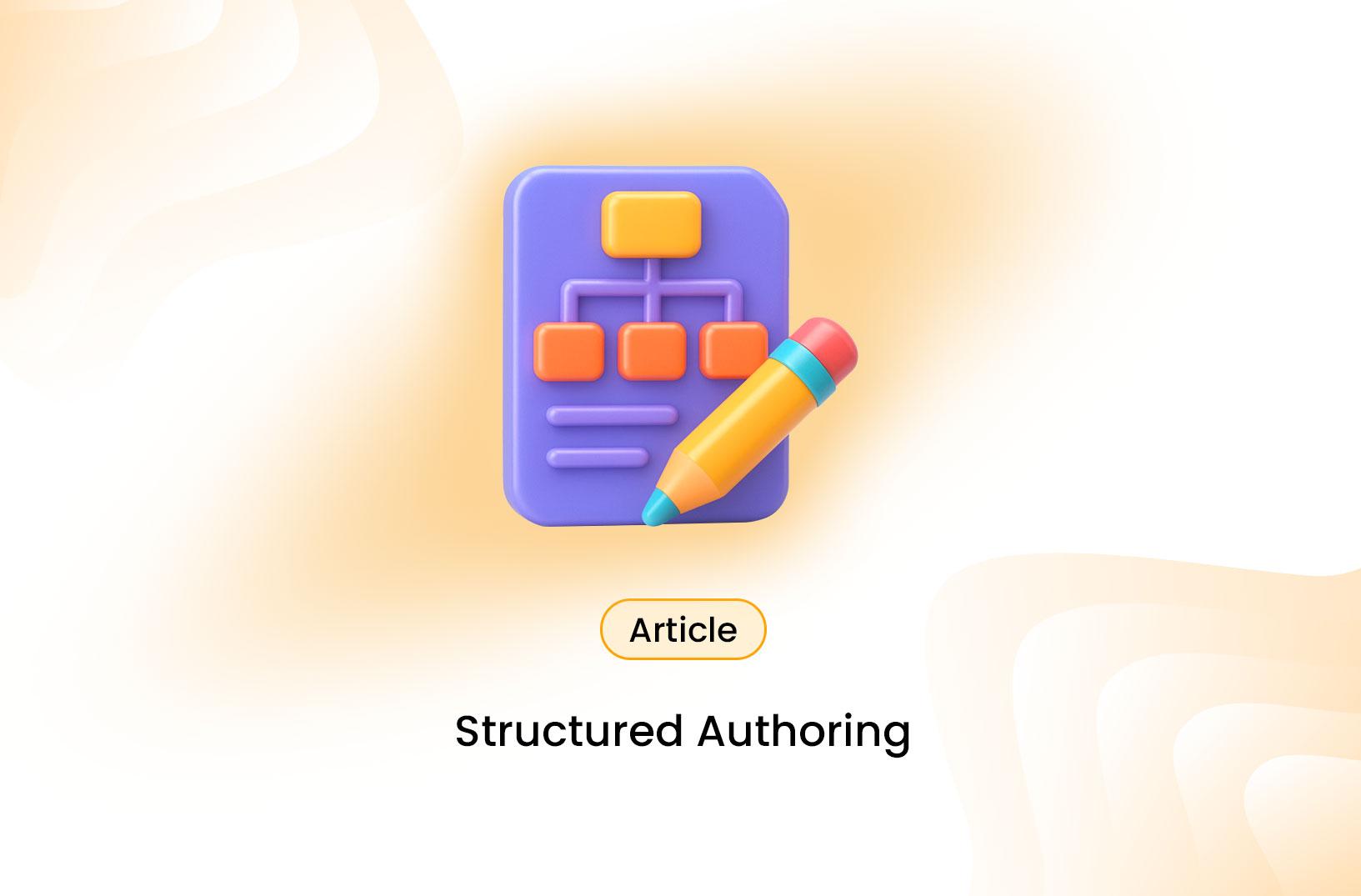
As documentation grows in scale and complexity, teams face challenges with consistency, reuse, accuracy, and maintenance. Structured authoring offers a solution by organizing content into modular, reusable components governed by rules, standards, and metadata. This approach not only streamlines content creation but also significantly elevates documentation quality.
1. Enforces Consistency Across All Documentation
Structured authoring relies on predefined templates, content models, and style rules. This ensures that every topic—whether a how-to guide, concept explanation, or reference page—follows the same structure and voice. Consistency helps users navigate documentation more easily and boosts their confidence in its reliability.
2. Improves Accuracy Through Reuse
Instead of rewriting the same information in multiple places, structured authoring enables you to create content once and reuse it across different documents. This reduces duplication and minimizes the risk of outdated or conflicting information. When a change is needed, you update it in one place, and it updates everywhere automatically.
3. Simplifies Collaboration for Large Teams
With structured authoring, writers, editors, and subject-matter experts work within a shared framework. Templates and content rules reduce ambiguity, helping teams work faster while ensuring the final output remains polished and uniform. This is especially valuable when multiple authors contribute to large documentation sets.
4. Enhances Findability with Metadata and Taxonomies
Structured content is enriched with metadata—tags, keywords, classifications, and relationships. This improves search accuracy, enables dynamic filtering, and helps users find the exact information they need. Combined with a well-defined taxonomy, structured authoring boosts discoverability across large knowledge bases.
5. Supports Multichannel Publishing
Structured content can be published to multiple formats—web, PDF, in-product help, chatbots, or APIs—without manual rewriting. You write once and deliver everywhere. This speeds up publishing cycles and ensures consistent content across all user touchpoints.
6. Reduces Localization Costs
Because structured content is clear, standardized, and modular, it's significantly easier to translate. Translators work with predictable patterns and smaller content units, leading to lower translation costs, faster turnaround, and fewer errors.
7. Future-Proof Documentation Systems
Structured authoring aligns with modern documentation technologies, including headless CMSs, DITA-based systems, and component-driven frameworks. Its modular nature also makes content easier to integrate with automation, AI assistants, and personalized content delivery platforms.
Conclusion
Structured authoring improves documentation quality by making content more consistent, reusable, scalable, and easy to manage. For teams facing rapid product growth or supporting complex documentation ecosystems, adopting structured authoring is not just a workflow upgrade—it's an investment in long-term content quality and efficiency.