In the world of technical writing and documentation, structure and consistency are everything. As products grow in complexity, so does the need for a system that keeps documentation modular, reusable, and easy to manage.
That's where DITA, the Darwin Information Typing Architecture comes in.
DITA is more than just a documentation standard; it's a framework designed to make technical communication structured, scalable, and efficient. In this guide, we'll explore what DITA is, how it works, and why it's become a cornerstone in enterprise documentation.
What Is the DITA Framework?
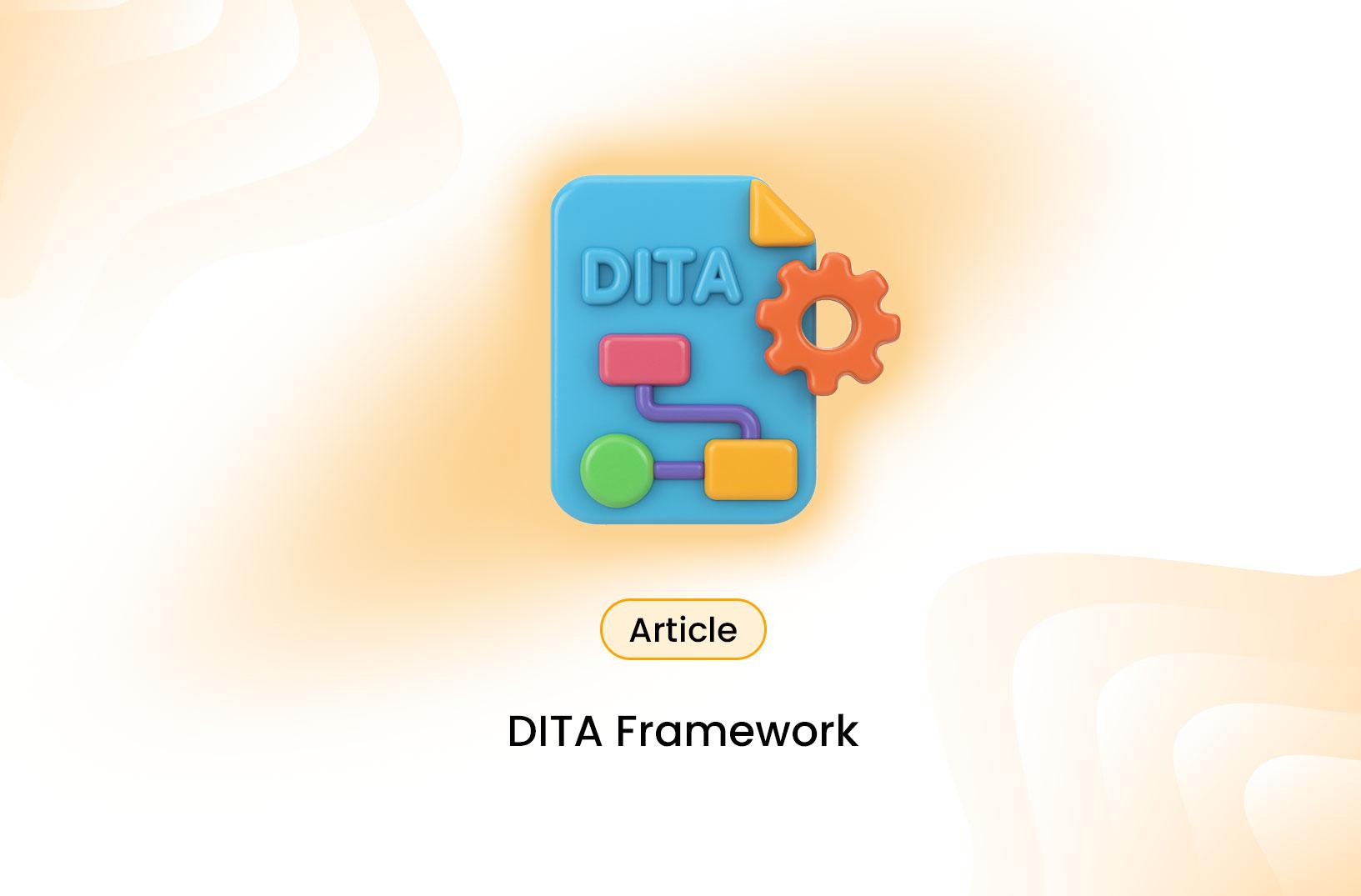
DITA (Darwin Information Typing Architecture) is an XML-based architecture developed by IBM and now maintained by OASIS, an international standards organization.
At its core, DITA helps writers create structured, topic-based documentation. Instead of writing large, monolithic manuals, DITA breaks content into small, reusable units called topics.
These topics can then be combined, reused, and published in different formats such as web pages, PDFs, or help systems without rewriting the same information multiple times.
The Core Concepts of DITA
To understand DITA, it helps to break down its main building blocks.
1. Topics
A topic is the fundamental unit of content in DITA. Each topic focuses on a single subject and answers one main question.
There are three standard topic types:
- Concept: explains what something is (e.g., “What is an API?”)
- Task: describes how to do something (e.g., “How to create an API token”)
- Reference: provides factual details (e.g., “List of configuration parameters”)
By separating content into these types, DITA enforces clarity and structure — making information easier to read, reuse, and maintain.
2. Maps
A DITA map defines how topics are organized and connected. Think of it as a table of contents that references individual topics.
Maps allow you to:
- Arrange topics in a logical sequence
- Control which topics appear in different outputs
- Create product guides or manuals dynamically
For example, a “User Guide” map might include the same “Installation” topic used in both “Administrator Guide” and “Developer Guide.”
3. Specialization
DITA is built to be extensible. You can create specialized topic types or elements that fit your organization's unique needs — while still following DITA's core structure.
This “Darwinian” approach (hence the name) lets you inherit existing standards and adapt them as needed, ensuring both flexibility and consistency.
4. Reuse and Transclusion
One of DITA's most powerful features is content reuse. You can reuse topics, snippets, or even single paragraphs across multiple documents using conrefs (content references) or keys.
This means if you update a single piece of content (say, a warning message or a feature description), that change automatically applies everywhere it's used.
How the DITA Workflow Works
A typical DITA documentation workflow looks like this:
- Authoring: Writers create modular topics using XML editors like Oxygen XML Editor or XMetaL.
- Organization: Topics are structured and linked through DITA maps.
- Review and Collaboration: Teams review topics individually for accuracy and style.
- Publishing: The DITA Open Toolkit (DITA-OT) or similar tools transform XML into output formats such as HTML, PDF, or ePub.
- Maintenance: Reused topics can be updated once and automatically reflected across all documents.
This modular approach makes large documentation projects easier to manage, especially in multi-product or multi-language environments.
Benefits of Using DITA
DITA offers several key advantages for organizations that produce large-scale or complex documentation.
1. Consistency and Structure
DITA enforces a consistent format across all content. Writers follow standardized templates for concepts, tasks, and references.
2. Content Reuse
Create once, use everywhere. Reuse entire topics or fragments across guides, products, and versions.
3. Easier Localization
Because topics are modular and structured, translating DITA content is faster and more cost-effective.
4. Scalability
DITA scales with your documentation needs, from a few pages to thousands of topics, without losing structure or clarity.
5. Automation and Output Flexibility
With the DITA Open Toolkit, you can automatically publish to multiple formats and channels from the same source.
Common Tools in the DITA Ecosystem
Working with DITA often involves specialized tools for authoring, managing, and publishing.
| Category | Examples |
|---|---|
| XML Editors | Oxygen XML Editor, XMetaL, FrameMaker |
| Content Management Systems (CCMS) | IXIASOFT, Paligo, Componize |
| Publishing Tools | DITA Open Toolkit (DITA-OT), easyDITA |
| Collaboration Platforms | Git, Confluence, or custom workflows |
While the initial setup may require effort, these tools streamline the authoring and publishing process for large-scale teams.
Challenges of Adopting DITA
Despite its advantages, DITA isn't for everyone. Small teams or startups may find it complex due to its technical nature and setup requirements.
Common challenges include:
- Steeper learning curve for writers unfamiliar with XML
- Higher initial setup and tooling costs
- Need for technical infrastructure (CCMS, build pipelines, etc.)
However, for organizations managing multiple products or translations, the long-term efficiency gains often outweigh the initial investment.
DITA vs. Traditional Documentation
| Feature | Traditional Docs | DITA Framework |
|---|---|---|
| Structure | Freeform | Strict XML-based structure |
| Reuse | Limited | Highly modular and reusable |
| Output | Manual or single format | Multi-format publishing |
| Collaboration | Linear | Topic-based and scalable |
| Maintenance | Time-consuming | Centralized and efficient |
In essence, DITA transforms documentation from static content into structured, intelligent information.
When to Consider DITA
You might want to adopt DITA if:
- You maintain large, complex documentation
- Your product spans multiple versions or audiences
- You manage translations or localization
- You need automated multi-channel publishing
If you're producing smaller or one-off documentation, lighter frameworks (like Markdown or AsciiDoc) might be a better fit.
Conclusion
The DITA framework is a powerful solution for managing complex documentation ecosystems. By promoting modularity, reuse, and consistency, DITA helps teams produce scalable and maintainable content, even across multiple products, teams, and languages.
While it comes with a learning curve, the long-term payoff is significant: faster authoring, better collaboration, and content that's always structured and ready to grow.